Mechanical and Microstructural Control of Dendrite Initiation and Li Plating on Oxide and Sulfide Solid Electrolytes
- Date: Mar 20, 2026
- Time: 11:00 AM - 12:00 PM (Local Time Germany)
- Speaker: Prof. Wendy Gu
- Standard university, USA
- Location: Max Planck Institute for Sustainable Materials
- Room: Large Conference Room No. 203
- Host: on invitation of Yuwei Zhang / Prof. Gerhard Dehm
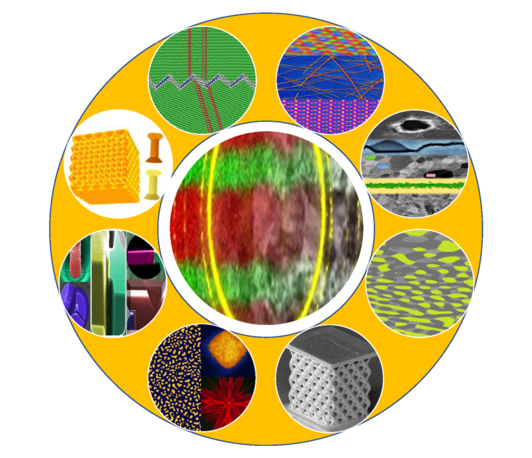
Lithium metal solid-state batteries have high potential for safety, energy density, and charging rate beyond that of Li-ion batteries. A major challenge for lithium metal solid-state batteries is the formation of lithium dendrites across the solid electrolyte during cycling, which leads to short-circuiting and mechanical failure of the cell. The reason that dendrites form is not fully understood, but evidence shows that dendrites could initiate either at the surface or within the interior of the solid electrolyte. Here, I present our use of in-situ mechanical and electrochemical testing to investigate dendrite initiation and propagation. Scanning electron microscopy and optical microscopy are used to observe nano to millimeter-scale structural changes in garnet-type oxide solid electrolytes (LLZO) and glassy sulfide electrolytes under mechanical loads and electrochemical charging. We find that dendrite propagation follows Weibull statistics in polycrystalline LLZO. Ag-doped LLZO shows increased resistance to dendrites under elevated mechanical loads due to compressive stress effects at the LLZO surface. Investigations on single crystal LLZO demonstrate that the role of surface flaws in the absence of grain boundaries, and that Li plating can be achieved over large areas. Confocal raman spectroscopy is used to understand chemical heterogeneities within a glassy sulfide electrolyte control the mechanical failure. Lastly, I present the effect of biaxial compressive stress on dendrite initiation and propagation in LLZO. The biaxial compressive stress is applied orthogonal to the electric field generation, and serves to close cracks that extend from the anode, through the electrolyte, to the cathode. This allows lithium symmetric cells to be cycled at current densities up to 100 mA/cm2, for >10,000 cycles, and provides evidence that lithium plating occurs within the interior of LLZO when surface dendrite initiation is suppressed.