Scientific Events

Host: Prof. Gerhard Dehm Location: Max-Planck-Institut für Eisenforschung GmbH

MPIE-Colloquium: Complex nanostructures and nanocomposites for plasmonic and photonic applications

MPIE-Colloquium: Complex nanostructures and nanocomposites for plasmonic and photonic applications
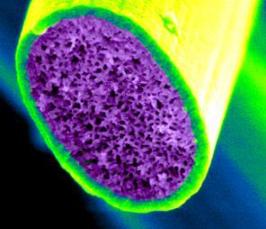
Nanoparticles, nanowires, and many other nanostructures are produced and investigated for applications for quite some time. The desired functionality is not easy to achieve in a reproducible way. Various methods will be presented how such structures can be produced in a well defined arrangement and well defined functionality. Nanoporous gold nanosponges will be presented and it will be shown how disorder can be used to obtain a robust and reproducible functionality, i.e. disorder can be used for precision.In addition, nanoporous nanostructures can be easily tuned for applications by advancing them to nanocomposites with desired functionality, which can be used in medicine, energy storage and conversion, photocatalysis and further applications. [more]

Investigation of Nanostructural Materials by means of X-Ray Powder Diffraction

Investigation of Nanostructural Materials by means of X-Ray Powder Diffraction
Nanostructured materials represent a well-established part of nanoscience today due to their tunable electrical, optical, magnetic and catalytic properties, and their potential in nanomedicine. There are some common techniques used for the investigation of nanomaterials, e.g. light scattering (DLS and NTA), scanning and transmission electron microscopy (SEM and TEM), fluorescence and IR spectroscopy and many others. X-ray powder diffraction (PXRD) with different geometrical setups is a complementary non-destructive technique for the determination of crystallographic and size-related properties of nanostructured materials. Here, some examples of PXRD measurements in different applications with the use of Rietveld analysis, including size-specific data obtained from colloid-chemical analysis, transmission and scanning electron microscopy will be presented. Several scientific questions will be addressed, like: - How can crystallite size, residual stress and texture be determined for nanostructured materials? - How is it possible to investigate a thin coating of nanomaterials? - Which advantages does a characterization of samples in temperature chamber offer? It will be shown that the non-destructive X-ray method is well suited to describe not only the crystallographic properties of nanostructural materials, but also their size, shape and inner structure with a possible atomic substitution as well as their “nano”-orientation on the surface. All these scientific answers can be received by the use of different X-ray diffractometers such Bruker D8 Advance and Panalytical Empyrean available at the facility for X-ray Diffraction of the University of Duisburg-Essen. [more]

A pull-to-bend testing technique for testing Single crystal Silicon

A pull-to-bend testing technique for testing Single crystal Silicon

In situ HR-EBSD characterization during micro-mechanical testing

In situ HR-EBSD characterization during micro-mechanical testing
Quantification of the mechanical properties of crystalline materials at micro and nano length-scales is as important as it is challenging. In situ mechanical testing inside the SEM using a micro-indenter offers the great advantage of a direct observation of the progressive deformation in materials and has been applied for many years to assess the deformation mechanisms at small scale. This is now reinforced by the capability of doing in situ EBSD and HR-EBSD in order to map the evolution of the microstructure, the stress field and the GNDs distribution in the materials at several steps during progressive deformation. We apply this technique to estimate the size of the plastic zone underneath the crack tip during micro-cantilever bending in tungsten and NiAl intermetallic for fracture toughness determination. HR-EBSD is used to map the evolution of the stress field around the notch tip and to estimate the GNDs in the plastically deformed zone. In situ EBSD has been also applied to micropillar compression in alpha Titanium in order to study the formation and evolution of compressive twins during the deformation. The results show dislocation driven twin formation and twin propagation and thickening according to the local resolve shear stress. [more]

Strain-induced room temperature grain coarsening: side effect or major energy dissipation mechanism?

In this talk an overview of the room temperature grain coarsening effect in polymer-supported thin gold and copper films under cyclic mechanical loading will be presented. Detailed EBSD analysis, as the major characterization method, allows to capture extensive statistical data about the evolution of thousands of grains with the cycle number but also to observe the motion and elimination of single grain boundaries. It will be shown that very strong and homogeneous grain coarsening occurs in 500 nm gold films where the average grain size grows from 200 nm to approximately 2 µm during cyclic loading. In contrast, 500 nm thick copper films with bi-modal grain size distribution exhibit rather moderate grain coarsening which leads to the reduction of the fraction of ultra-fine grained areas. The correlation between the grain coarsening and the development of fatigue damage will be discussed along with background mechanisms of motion and elimination of grain boundaries. [more]

Understanding fatigue crack initiation in Ni superalloys: a study with HR-EBSD, HR-DIC and CP-FEA

The lifetime of aerospace engineering components is often limited by fatigue. Traditional management strategies presuppose an existing defect length and estimate time to failure through short crack growth and propagation methods, using empirical approaches such as fitting of a Paris’ law. New advances in material processing and production render this argument insufficient to exploit tackle the next generation clean and well-engineered materials, as these growth based empirical studies are too conservative for effective engine management. In this talk, I will outline our recent work focussing on exploiting the next generation of characterisation tools, such as high (angular) resolution electron backscatter diffraction, high (spatial) resolution digital image correlation, combined with geometrically faithful and relatively simple (i.e. limited free parameters) lengthscale based crystal plasticity approaches. These have been brought to bear on a experimental and modelling campaign that focusses on tracking deformation and damage accumulation in single, directionally solidified, polycrystalline and polycrystalline Ni-superalloys with inclusions. In this talk I will outline some highlights from this body work which include: a comparison of ability of HR-DIC and HR-EBSD to recover components of the deformation tensor; understanding accumulated damage and the onset of cracking near non-metallic inclusions; and predicting and understanding accumulated slip in fatigue. [more]

Advanced AFM based electrical characterization on the nanometer scale

Besides morphological characterization, atomic-force microscopy (AFM) based techniques can also successfully be employed to study electrical and optoelectronic properties on the nanometer scale via conductive atomic-force microscopy (C-AFM) and Kelvin Probe Force Microscopy [1]. This will be demonstrated for dielectric thin films [2] as well as for of individual semiconductor nanostructures like upright standing ZnO nanorods [3,4] polycrystalline ZnO multilayer varistors [5,6], Ge nanodomes [7] and nanostructured graphene flakes [8]. ........................ [1] C. Teichert, I. Beinik, in “Scanning Probe Microscopy in Nanoscience and Nanotechnology”, Vol. 2, Edited by B. Bhushan, (ISBN 978-3-642-10496-1) (Springer-Verlag, Berlin, 2011), pp. 691-721 [2] S. Kremmer, et al. J. Appl. Phys. 67 (2005) 074315. [3] I. Beinik, et al., J. Appl. Phys. 110 (2011) 052005. [4] I. Beinik, et al., Beilstein J. Nanotechnol. 4 (2013) [5] M. Hofstätter, et al., J. Eur. Ceram. Soc. 33 (2013) 3473. [6] A. Nevosad, Proc. SPIE 8626 (2013) 862618. [7] Kratzer, et al., Phys. Rev. B 86 (2012) 245320. [8] B. Vasić, et al., Nanotechnology 24 (2013) 015303. [more]
Show more
Go to Editor View