Pushing limits of detection in an electron microscope: Electron Energy Loss Spectroscopy at high energy, spatial and momentum resolutions
- Date: Sep 24, 2026
- Time: 04:45 PM - 05:45 PM (Local Time Germany)
- Speaker: Prof. Dr. Demie Kepaptsoglou
- SuperSTEM, Daresbury, and University of York, United Kingdom
- Location: Max Planck Institute for Sustainable Materials
- Room: Large Conference Room No. 203
- Host: on invitation of Prof. Dierk Raabe / Prof. Gerhard Dehm
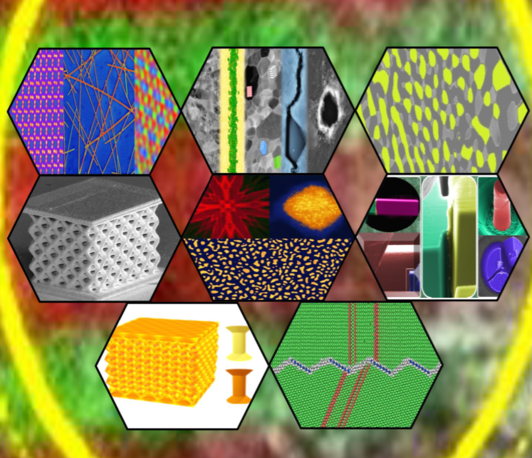
Engineering the structural or chemical architecture of functional materials at the nano or even atomic level enables emergent properties that rely on the interplay between fundamental properties of matter such as charge, spin and local atomic-scale chemistry. Thanks to advances in monochromators, state-of-the-art electron energy loss spectroscopy (EELS) in the scanning transmission electron microscope (STEM), offers nowadays the ability to map materials and atomic structures with an angstrom size electron beam and an energy resolution for EELS under 5meV [1]. These capabilities have allowed to probe the spectroscopic signature of phonons down to the single atom level [2] as well the detection of spin waves (magnons) in an electron microscope [3] which in tandem with high precision imaging and other wealth of information available have allowed for exciting new experiments in the electron microscope, rivaling synchrotron light sources. Here, we will be discussing recent methodological developments in STEM-EELS, experimental geometries for momentum and spatially resolved measurements and present opportunities for new experiments using monochromate electron probes across systems for thermoelectric, spintronic applications. We will also be exploring how high resolution EELS can provide insights into the cosmos and planetary science, as well as allow us to revisit fundamental materials questions such casting and solidification of light alloys. 1.O. L. Krivanek et al, J. Phys. Conf. Ser. 522, 012023 (2014). 2. F. S. Hage et al, Science 367, 1124 LP (2020). 3. D. Kepaptsoglou et al, Nature 644, 83–88 (2025).