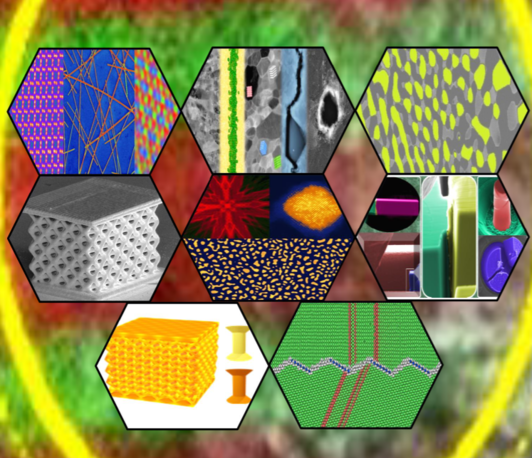
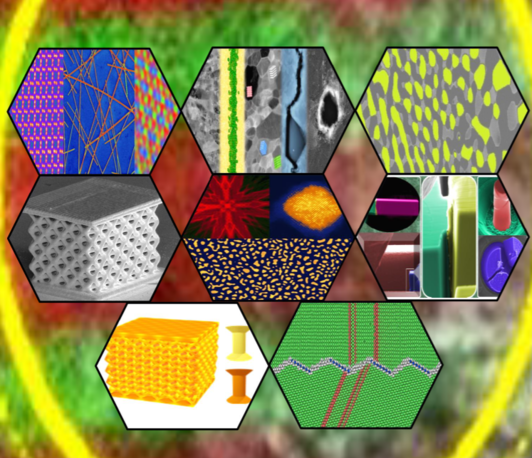
The diversities in crystalline structure and the hierarchical features of the structures in steels lead to their distinguished deformation behaviour, elastic properties, magnetic properties, mechanical properties, etc. In the research of steels, the linkage of structure-processing-property-performance-circularity is considered as the very important principle to understand the alloys. Following this basic principle, one can further design, select and assess suitable materials for a specific application. Over the last decades, based on multi-scale understanding - from metre to micrometre and further down to nanometre and atomic-scale, a number of extraordinary steels have been successfully developed and commonly applied globally. This research work will present the alloy design, multi-scale characterization and nano-engineering approaches that offer new opportunities to design and engineer the sustainable steels into hierarchical structures with tailored properties. New approach that aid controlling the process of phase transformation in tramp element tolerant steels will be discussed.
[more]